
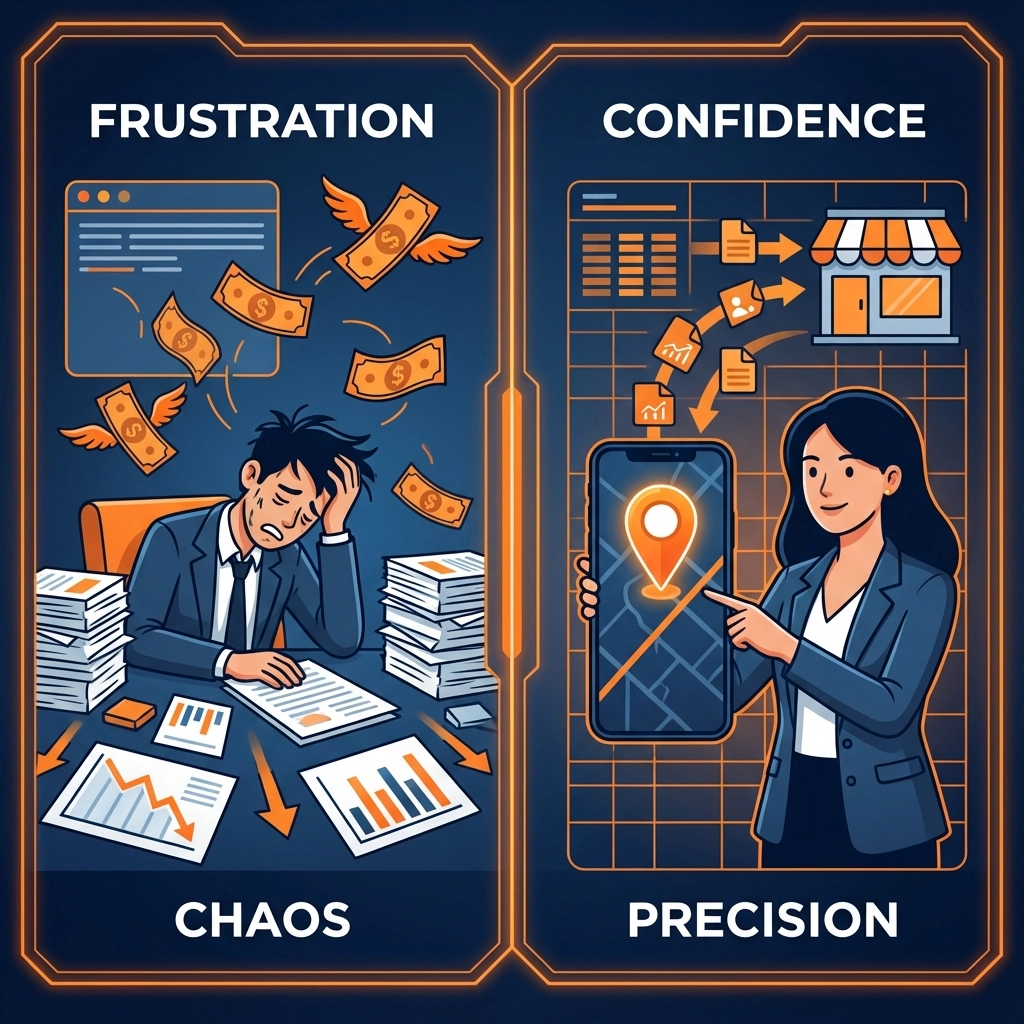
You're throwing money at Google Ads like confetti at a wedding, hoping something sticks. Your dashboard shows clicks, impressions, and a steadily draining budget, but your phone isn't ringing and your door isn't swinging. Sound familiar?
Here's the brutal truth: most businesses are still using Google Ads like it's 2010, casting the widest possible net and wondering why they're catching mostly junk. Meanwhile, smart businesses have moved to location-based advertising and they're stealing your customers while you're still fishing in the wrong pond.
Let's talk about why geolocation targeting isn't just better than generic Google Ads: it's a completely different game.
The Spray-and-Pray Problem (And Why It's Bleeding You Dry)
Generic Google Ads operate on a simple premise: show your ad to as many people as possible who might be interested. Sounds logical, right? Wrong. It's like standing in Piccadilly Circus with a megaphone shouting about your plumbing services. Sure, thousands of people will hear you, but how many actually need a plumber right now? And how many live within 20 miles of your workshop?
This scattergun approach means you're paying for clicks from:
- People researching for future needs (maybe in six months)
- Competitors checking out your pricing
- Users hundreds of miles away who'll never use your service
- Bargain hunters who'll never become proper customers
Every irrelevant click is money down the drain. Every wasted impression is budget that could have gone toward reaching someone ready to buy today.
Enter Location-Based Advertising: Precision Over Volume
Location-based advertising flips the script entirely. Instead of shouting into the void, you're whispering directly into the right ears at exactly the right moment.
Here's how it actually works: using GPS, Wi-Fi signals, IP addresses, and mobile app data, these platforms identify where your potential customers are physically located. Then they serve ads based on real-time context: not just what someone searched for, but where they are, when they're there, and what they're likely to need.
Picture this: someone's car breaks down on the M25. They search "mechanic near me" on their phone. With location-based targeting, your garage ad appears because they're within your service radius and they need help now. With generic Google Ads, they might see an ad for a mechanic in Scotland because that business had a higher bid on the keyword.
Which scenario do you think converts better?
Why Location-Based Ads Crush Generic Approaches
1. You're Reaching People Who Are Actually Ready to Buy
The biggest difference between location-based and generic advertising is intent quality. When someone searches for a service while physically located in your area, they're not browsing: they're buying. They've moved past the research phase and entered the "I need this solved today" phase.
Generic Google Ads often catch people during early research stages. They click, browse your site, maybe bookmark it, then disappear into the ether. Location-based ads catch people when they're ready to pick up the phone.
2. You Only Pay for Quality Leads
Many location-based platforms, particularly Local Service Ads, operate on a pay-per-lead model rather than pay-per-click. You only pay when someone actually contacts you: not when they click and bounce.
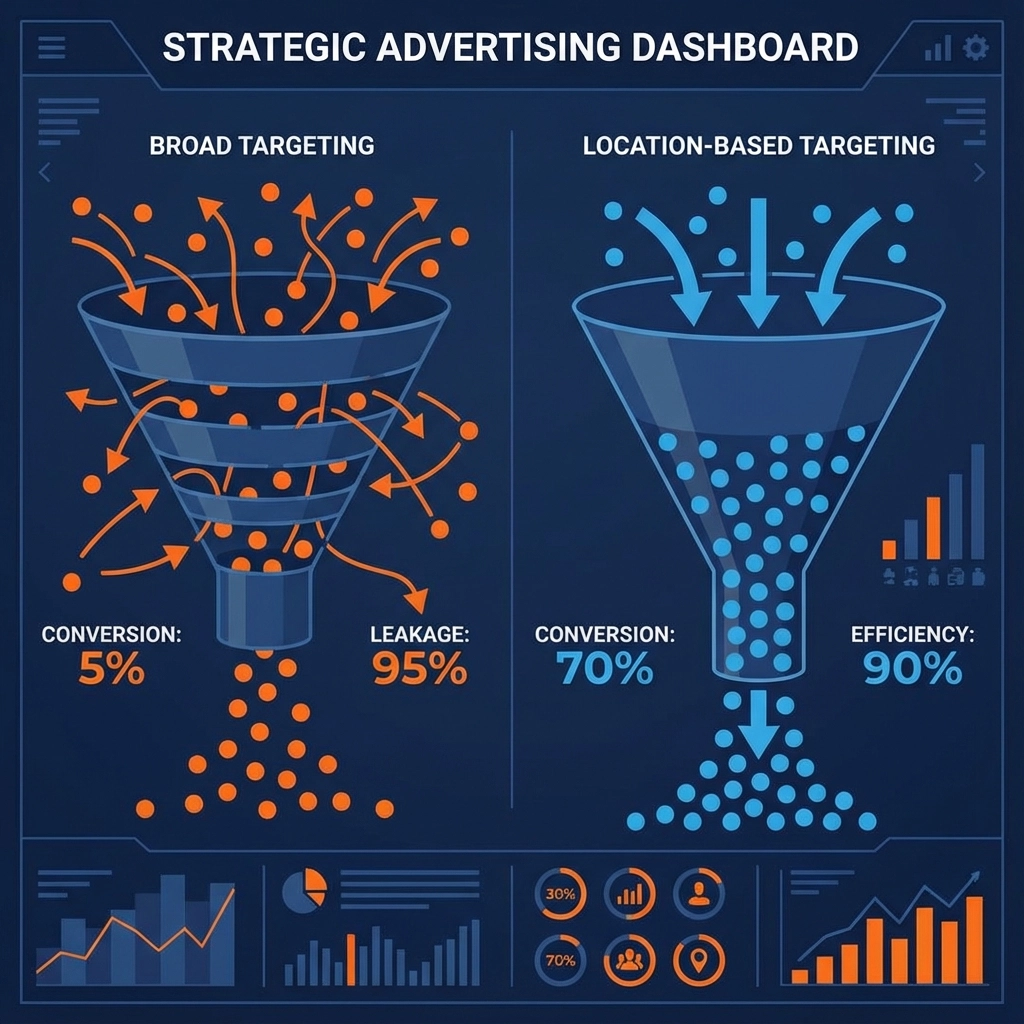
Think about the maths here. Generic Google Ads might cost you £2 per click with a 5% conversion rate. That's £40 per lead. Location-based ads might cost £25 per lead, but the leads are pre-qualified and ready to convert. Which would you choose?

3. Context Is Everything
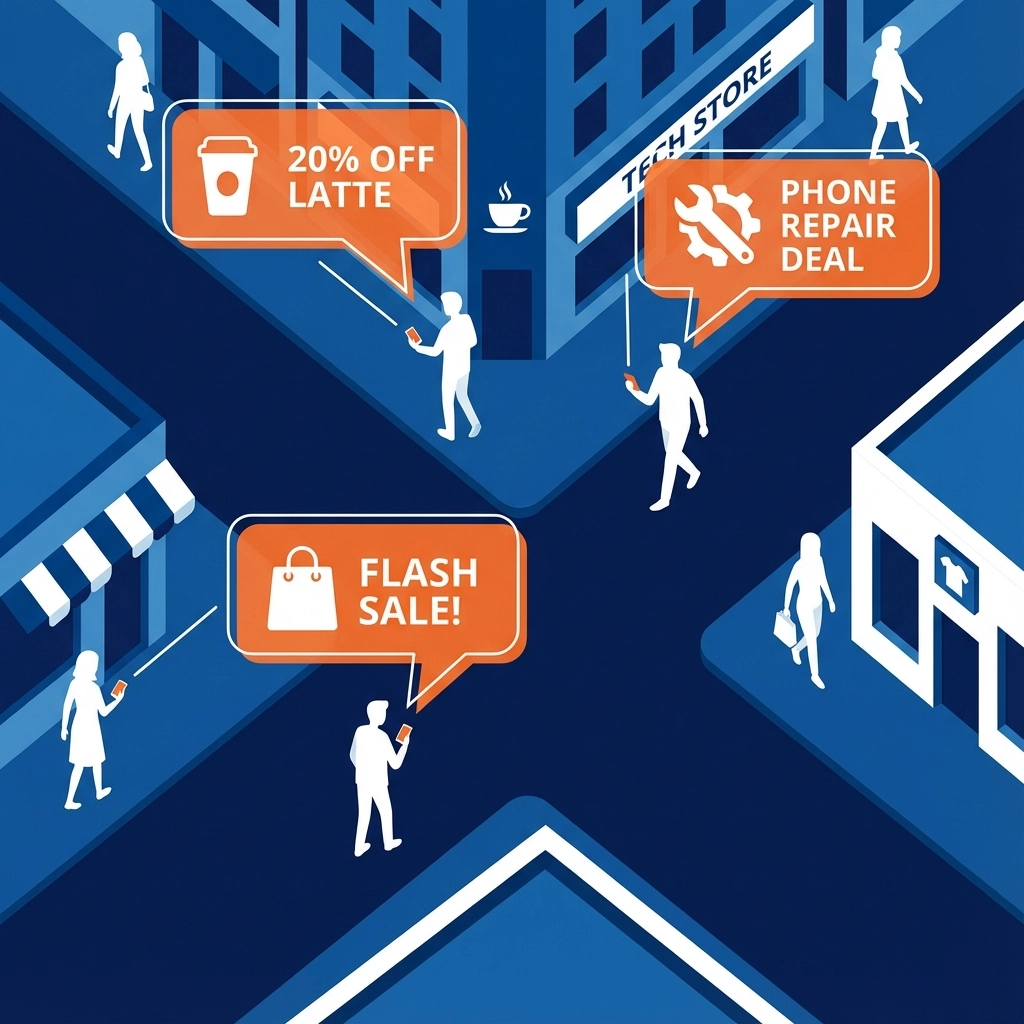
Location-based advertising leverages environmental context that generic ads simply can't match. A restaurant can target people walking nearby during lunch hours. A locksmith can reach people searching at 11 PM when they're locked out. A gym can target commuters passing by after work.
This contextual relevance creates advertising that feels helpful rather than intrusive. Instead of interrupting someone's day, you're solving their immediate problem.
4. Zero Geographic Waste
Every pound spent on generic ads that reach people outside your service area is a pound wasted. Location-based targeting eliminates this waste entirely. If you're a local electrician, why would you want to pay for clicks from someone 200 miles away who'll never use your services?
This precision targeting typically reduces cost per acquisition by 40-60% compared to broad geographic campaigns.
When Location-Based Advertising Makes Perfect Sense
Location-based advertising works best for businesses that serve customers in specific geographic areas:
Service-Based Businesses: Plumbers, electricians, cleaners, gardeners, mechanics, heating engineers, basically any business that physically travels to customers.
Retail with Physical Locations: Restaurants, shops, salons, gyms, automotive services: anywhere customers need to visit in person.
Emergency Services: Locksmiths, breakdown services, emergency repairs: businesses where timing and proximity are critical.
Healthcare and Professional Services: Dentists, solicitors, accountants: services where local presence builds trust.
When Generic Google Ads Still Have Their Place
Don't write off generic Google Ads entirely. They excel in specific scenarios:
National or International Businesses: If you ship products nationwide or provide digital services globally, geographic targeting might limit your reach unnecessarily.
Brand Building: For awareness campaigns targeting multiple regions, broader reach makes sense.
Niche B2B Services: If your ideal customer is scattered across the country, precision geographic targeting might be too restrictive.
Testing New Markets: Generic ads let you experiment with different geographic areas to identify promising expansion opportunities.
The Smart Money Strategy: Using Both
The most successful businesses don't choose between location-based and generic advertising: they use both strategically.
Run location-based ads for immediate lead generation in your core service area. Use generic Google Ads for brand building, reaching customers outside your primary zone, and testing new keywords or markets.
This hybrid approach maximises your market coverage while maintaining cost efficiency where it matters most.
Getting Started: Your Next Steps
If you're currently running generic Google Ads and wondering why your phone isn't ringing, here's your action plan:
Week 1: Audit your current Google Ads performance. Identify how much you're spending on clicks from outside your service area.
Week 2: Set up Local Service Ads if you're in a qualifying business category. Start with a modest budget and track lead quality.
Week 3: Implement geofencing around your business location and key competitor locations. Target people who visit these areas with relevant ads.
Week 4: Analyse the results. Compare lead quality, conversion rates, and cost per acquisition between your location-based and generic campaigns.
The Bottom Line
Location-based advertising isn't just a different flavour of Google Ads: it's a fundamental shift toward precision marketing. While your competitors are still spraying and praying, you can be surgically targeting customers who are ready to buy, in the right place, at the right time.
The businesses winning in local markets aren't necessarily the biggest or the oldest: they're the ones smart enough to fish where the fish are actually biting.
Your generic Google Ads might be generating impressive click-through rates and filling your analytics dashboard with beautiful charts. But if they're not filling your calendar with qualified appointments and your bank account with profits, what's the point?
Stop paying for window shoppers. Start targeting customers who are ready to buy. Your bottom line will thank you.


