
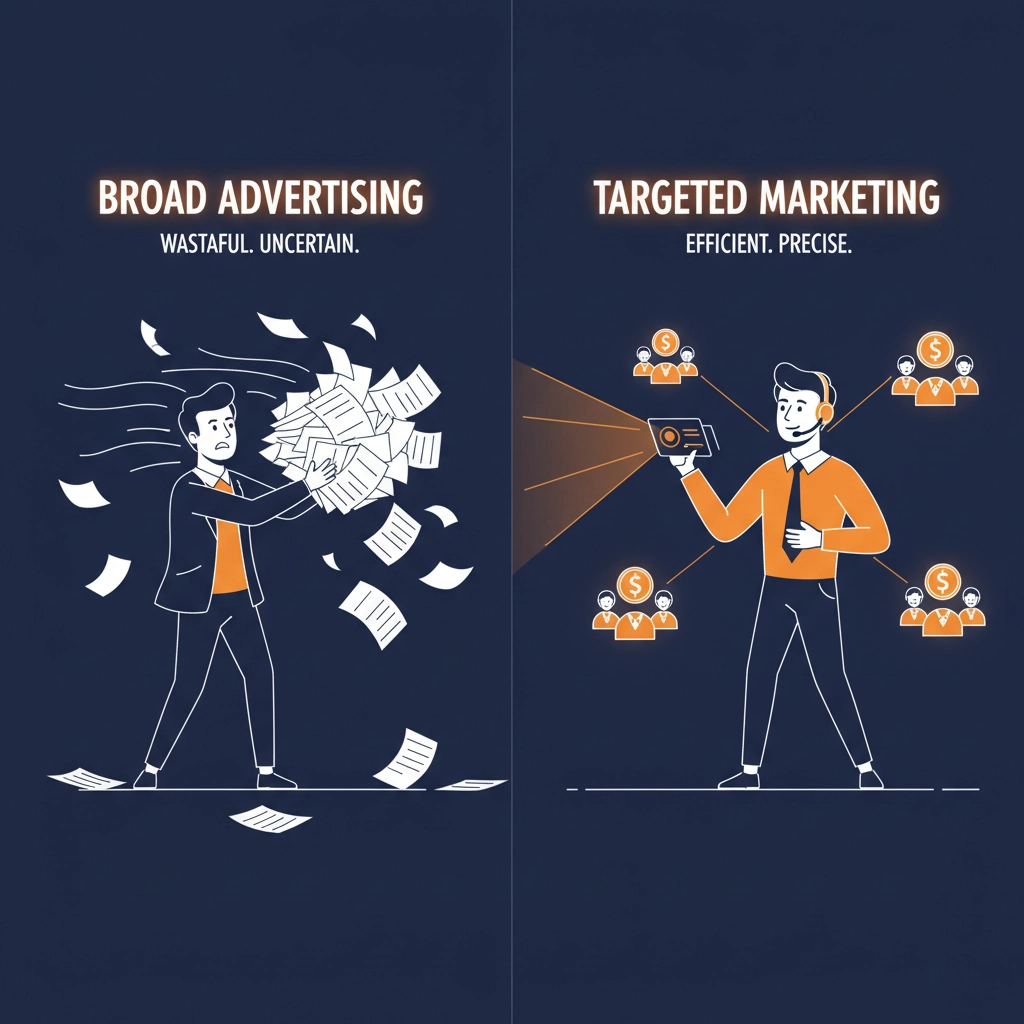
Picture this: You're blasting ads across the entire country, hoping someone, somewhere, might wander into your shop. Meanwhile, your competitor down the road is surgically targeting people within a five-minute walk of their door. Guess who's laughing all the way to the bank?
If you're still treating digital advertising like a shotgun when you should be using a sniper rifle, you're hemorrhaging money. Location-based ads aren't just another marketing gimmick, they're conversion rocket fuel for businesses smart enough to use them properly.
What Geolocation Targeting Actually Means (And Why You're Probably Doing It Wrong)
Let's cut through the buzzword soup. Geolocation targeting uses real-time location data to serve ads to people based on where they physically are right now. Not where they live. Not where they work. Where they're standing at this exact moment.
Here's where most businesses screw up: They think geolocation means targeting "London" or "Manchester." That's not geolocation, that's just basic geography with a fancy name.
Real geolocation targeting works in three layers:
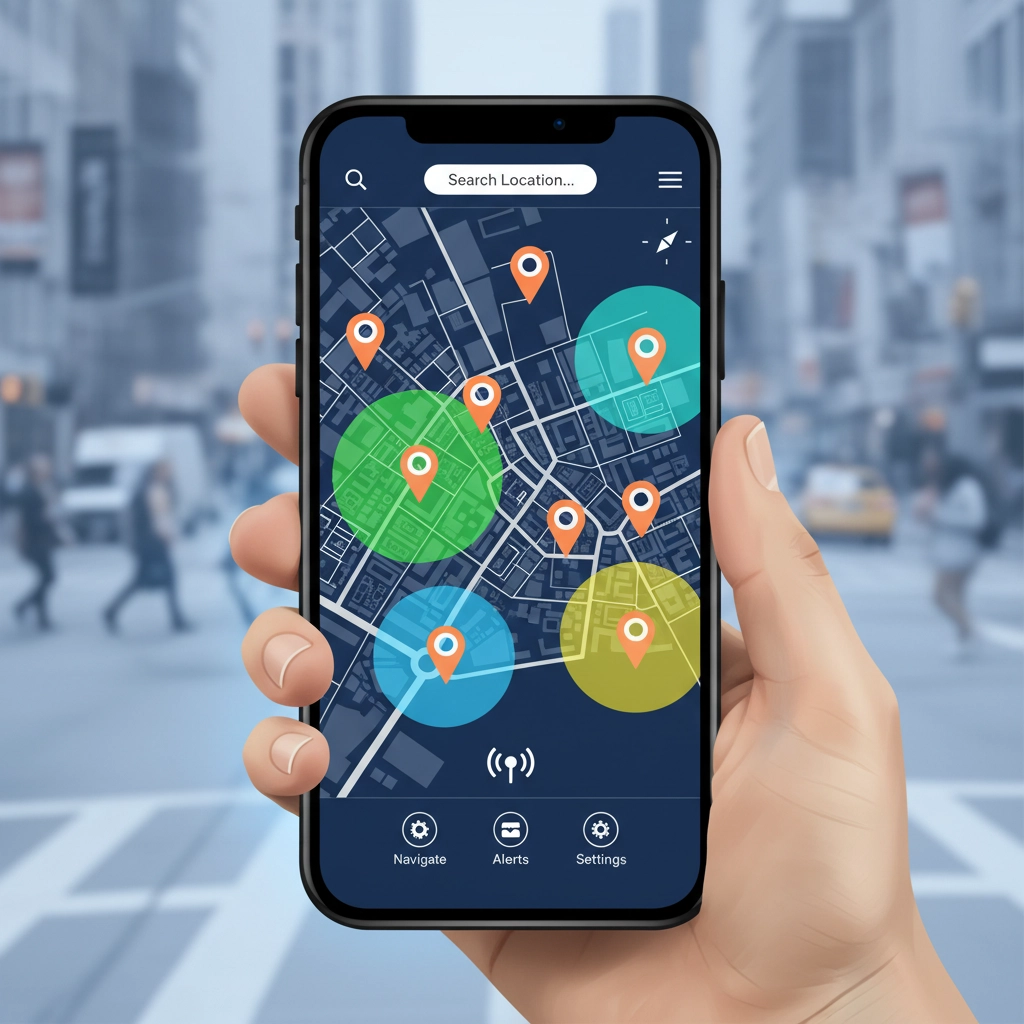
GPS Targeting pinpoints users within 1-3 metres of your location. Yes, you read that right. Three metres. You can literally target someone standing outside your competitor's front door.
Geofencing creates invisible boundaries around specific locations. Walk through the boundary, get the ad. It's that simple.
Geo-conquesting targets people at your competitors' locations. Brutal? Yes. Effective? Absolutely.
The Conversion Numbers That'll Make You Rethink Your Entire Ad Strategy
Here's the thing about location-based ads: they don't just perform better. They obliterate traditional advertising metrics.
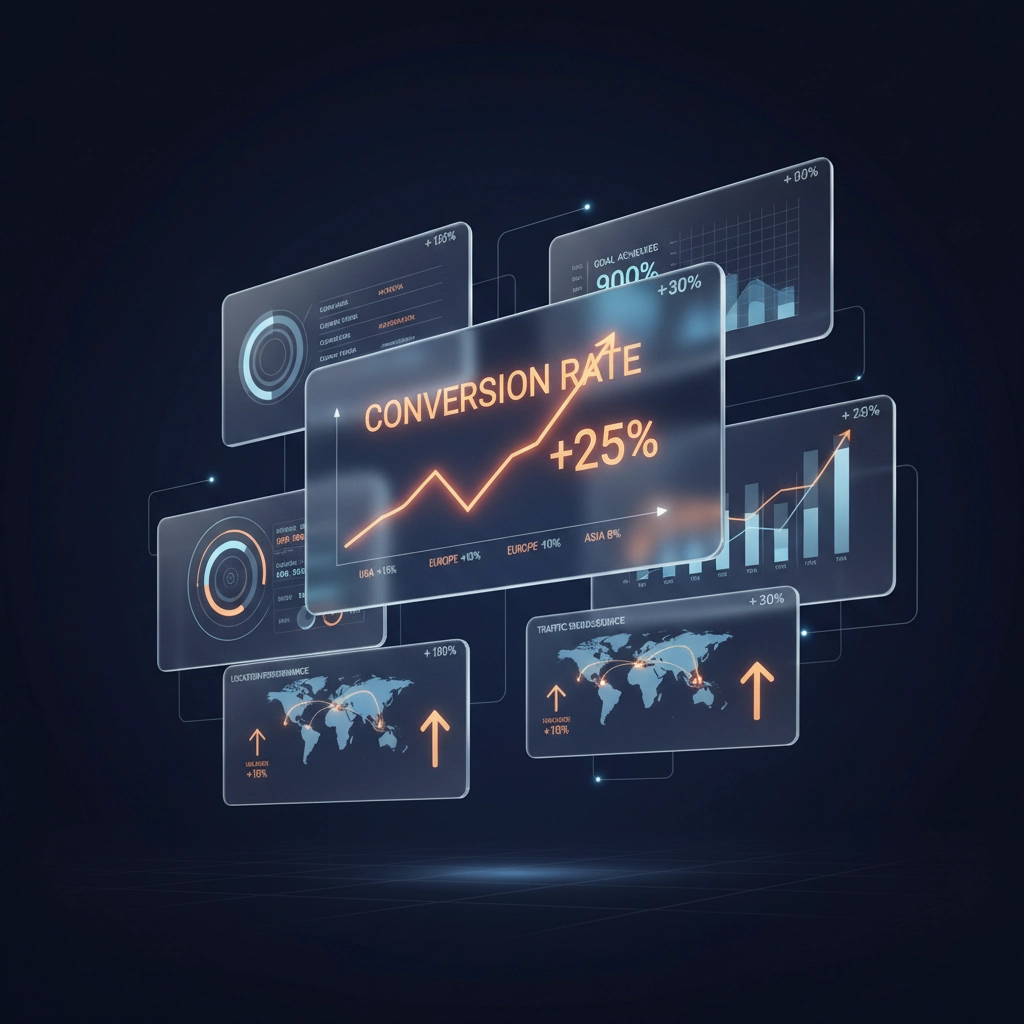
Personalised location-based campaigns boost conversions by up to 27%. But that's just the beginning. Whole Foods achieved a 4.69% post-click conversion rate using geofencing: more than triple the national average of 1.43%.
Denny's saw an 11.6% uptick in store visits for their geotargeted mobile ads. Their "Build Your Own French Toast" campaign? A staggering 34% increase in foot traffic.
Why do these numbers matter? Because they represent money. Real, measurable revenue that flows directly from precise targeting instead of spray-and-pray advertising.
Why Your Brain Is Wired to Respond to Location-Based Ads
Location-based ads work because they exploit a fundamental psychological trigger: immediacy and relevance. When someone sees a restaurant ad while they're hungry and walking down the high street, that's not coincidence: it's conversion psychology in action.
Think about your own behaviour. You see a coffee shop promotion while you're already thinking about caffeine. You get a retail discount notification while you're browsing in a shopping centre. The timing isn't random: it's surgical.
This contextual relevance removes friction from the decision-making process. There's no "I'll remember to check this out later." There's just "I'm here, they're here, let's do this."
Real Businesses, Real Results: Case Studies That Prove the Point
Canva's Global Precision Play
Canva didn't just translate their campaigns: they localised everything. Send times matched local business hours across 190 countries. Content adapted to local languages and cultural preferences.
The results? A 33% uplift in open rates, 2.5% increase in engagement, and here's the kicker: a 257% revenue increase in Germany and 145% in France. Germany became one of their top three markets within months.
Krispy Kreme's Multi-Layer Targeting
Instead of choosing between different geolocation methods, Krispy Kreme used them all. GPS targeting, geofencing, and behavioural data combined into one surgical campaign.
They generated 237 store visits at just $5.51 per visit: 72% lower than their $20 target. Their click-through rate doubled their goal, proving that precision targeting doesn't just improve results: it smashes them.
The Step-by-Step Blueprint for Location-Based Ad Success
Step 1: Map Your Customer Journey Geographically
Stop thinking in postcodes. Start thinking in footsteps. Where do your customers go before they need your product? Coffee shops before work meetings? Gyms before supplement stores? Car parks before shopping centres?
Step 2: Layer Your Targeting
Don't just use location data: combine it with everything else you know. Someone near your competitor + browsing your product category + lunch hour = prime conversion opportunity.
Step 3: Create Location-Specific Landing Pages
Generic landing pages kill conversions. If someone clicks your geotargeted ad, they should land on a page that mentions their location, local offers, and nearby store details.
Step 4: Time Your Messages Strategically
A restaurant ad at 11:30 AM hits different than the same ad at 3 PM. Know when your audience is in your area and when they're thinking about your product.
The Mistakes That'll Tank Your Location-Based Campaigns
Mistake #1: Casting Too Wide a Net
Targeting everyone within a 50-mile radius isn't geolocation: it's digital desperation. Tighten your radius until you're reaching people who can actually take immediate action.
Mistake #2: Ignoring Privacy Concerns
Be transparent about location data usage. Sneaky tracking tactics create brand damage that no conversion rate can fix. Tell people why location targeting benefits them.
Mistake #3: Generic Creative for Specific Locations
If you're geotargeting someone in Manchester city centre at lunchtime, your ad should reflect that reality. Generic creative wastes the precision of your targeting.
Mistake #4: Not Testing Different Proximity Levels
What works for a restaurant (500m radius) won't work for a car dealership (5-mile radius). Test different proximity settings to find your conversion sweet spot.
Beyond the Basics: Advanced Location-Based Strategies
Weather-Triggered Geotargeting serves different ads based on local weather conditions. Umbrella ads when it's raining, ice cream promotions when it's sunny.
Event-Based Geofencing targets people at concerts, sporting events, or conferences. Capture audiences when they're already in spending mode.
Competitor Store Visits retarget people who've visited your competitors in the past 30 days. If they're shopping around, make sure they're seeing your offers.
The ROI Reality Check
Location-based advertising doesn't just improve conversion rates: it slashes customer acquisition costs. By focusing ad spend on people who can immediately take action, you eliminate waste from your campaigns.
Consider this: Traditional digital advertising hopes 2-3% of your audience might eventually convert. Location-based ads target people who are physically capable of buying right now. The maths isn't complicated.
What Happens Next
Location-based advertising isn't future tech: it's here, it works, and your competitors are probably already using it. The question isn't whether you should implement geolocation targeting. It's whether you can afford not to.
Start small. Pick one location, create targeted ads for people within walking distance, and measure the results. Once you see the conversion rates, you'll understand why smart businesses are moving their entire ad spend toward location-based campaigns.
The businesses winning in 2025 aren't the ones with the biggest budgets. They're the ones with the most precise targeting. Location-based ads turn advertising from a numbers game into a precision instrument.
Your customers are out there, walking around with GPS-enabled devices, ready to buy. The only question is: Are you smart enough to find them?


